
Faith
Women
One Woman's Story
• Faith & Wellness
Why Millions of Christian Women Are Secretly Exhausted by Their Own Faith — And the Hidden Reason No Pastor Will Talk About
"I thought I was the only one. Turns out, millions of us are drowning in the same thing — and nobody's saying it out loud."
by
Rachel Harris
Contributor · Faith & Wellness
Published April 17, 2026 · Updated 4 hours ago

I didn't plan on writing this.
I'm not a pastor. I'm not a Bible teacher. I'm a 42-year-old mom of three who, up until about a year ago, was quietly falling apart in a way I couldn't tell anyone about.
If you'd asked me then, I would've told you everything was fine. I went to church. I said the prayers. I bought the devotionals God, I bought a lot of devotionals.
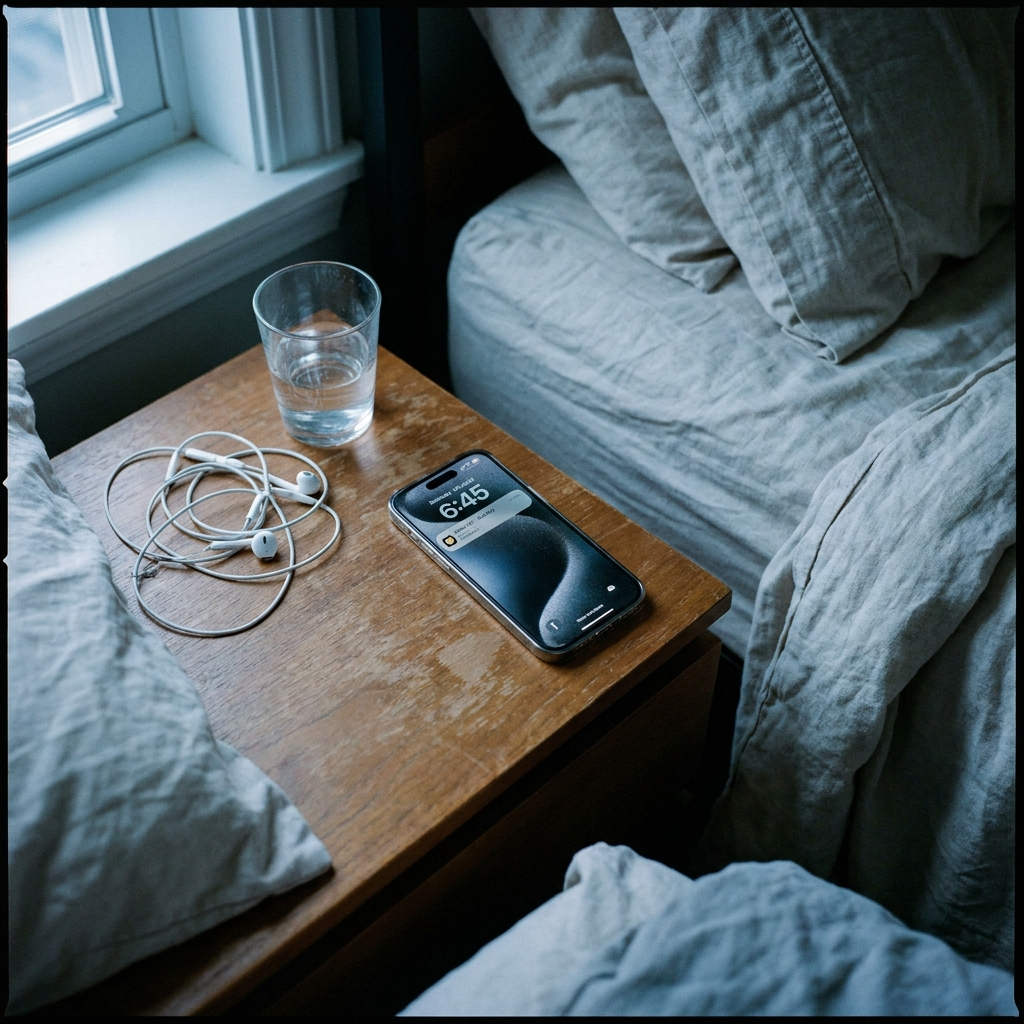
The prayer journal with three pages filled out. I don't have a discipline problem. I have a stack of barely-started devotionals on my nightstand and a quiet voice that whispers maybe if I loved Him more, this wouldn't keep happening. That voice was lying to me.
But the truth is, I hadn't actually opened my Bible in almost four months.
I didn't decide to stop. Nobody ever decides to stop. It just sort of… happened. One Tuesday I skipped. Then a week. Then I couldn't remember the last time I'd cracked it open, and every time I saw it sitting on my kitchen table I'd feel this small, sick feeling in my chest and then I'd walk past it again.
I'm sitting here writing this at that same kitchen table right now. The Bible is still there. Closed.
And for the first time in a long time I'm not ashamed of it.
Here's what I want to tell you, if you've felt any of this.
It's not just you.
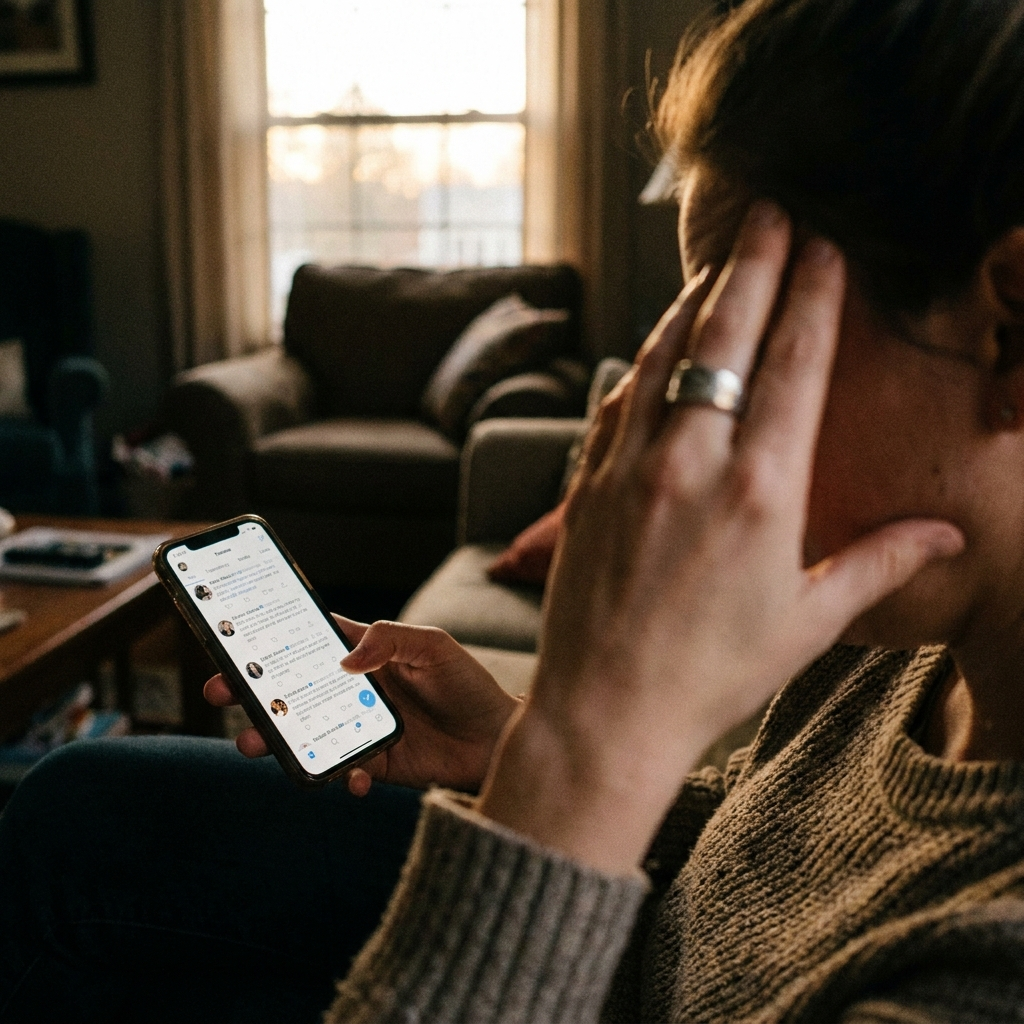
I used to think I was the only one. I'd sit in small group and listen to women talk about their "quiet time" and I'd nod and smile and die a little bit inside. Because my quiet time was me scrolling my phone at 11 PM pretending I wasn't avoiding the thing I was supposed to be doing.
I felt like a fraud. I felt like I was faking a relationship with God. I was pretty sure if He looked too closely, He'd be disappointed. And that fear that I was one honest conversation away from being found out was quietly crushing me for years.
I'd pick a new devotional every January. I'd tell myself this one would be different. And every March I'd be back on my phone at 11 PM, pretending.
One night about a year ago I was up later than I should've been, Googling things like "am I a bad Christian" and "why can't I stay consistent with God." And somewhere around 1 AM I stumbled across an article that said something I'd never heard anyone say out loud before.
It said the reason so many women like me can't stay consistent can't read our Bibles, can't stick with a devotional, can't feel close to God no matter how hard we try isn't because we're lazy. Or faithless. Or broken.
It's because the system we were handed was designed to make us fail.
I read that line three times.
And then I started crying at my kitchen table. Not because it hurt because for the first time in about two decades, I wasn't the problem.
I went down a rabbit hole that night. I read research papers I barely understood. I read articles from Christian counselors. I read studies on something called "performance-based faith" and "conditional acceptance" and what shame actually does to the human nervous system when it thinks God is disappointed.
And slowly like a photograph developing a picture came into focus that explained almost every year of my adult Christian life.
I wasn't weak. I wasn't faithless. I wasn't "falling away."
I'd been running on a system that was quietly designed to break me. And every time it broke me, it convinced me I was the thing that was broken.
I want to show you what I found. Because if you're the kind of woman who's been carrying a closed Bible around in your house and a secret ache in your chest for longer than you want to admit
you're not alone.
And the reason you've been struggling isn't the one they told you it was.

Here's the part nobody in church ever told me.
It's not a willpower problem. It's a wiring problem. And once you see it, you can't un-see it.
You don't have a discipline problem.
You never did.
You have a system problem. And the system was broken before you ever picked up your first devotional.
Here's what's actually happening.
Somewhere along the way, we learned that God's love works like a paycheck.
Show up. Perform. Get approved.
Miss a day. Fall behind. Lose standing.
So every morning, we're not just reading our Bibles. We're auditioning for the role of "real Christian." Every unopened page is a failed audition. Every missed morning is proof we're faking it.
That's not a relationship.
That's a job interview that never ends.
Here's the part that stopped me cold when I read it.
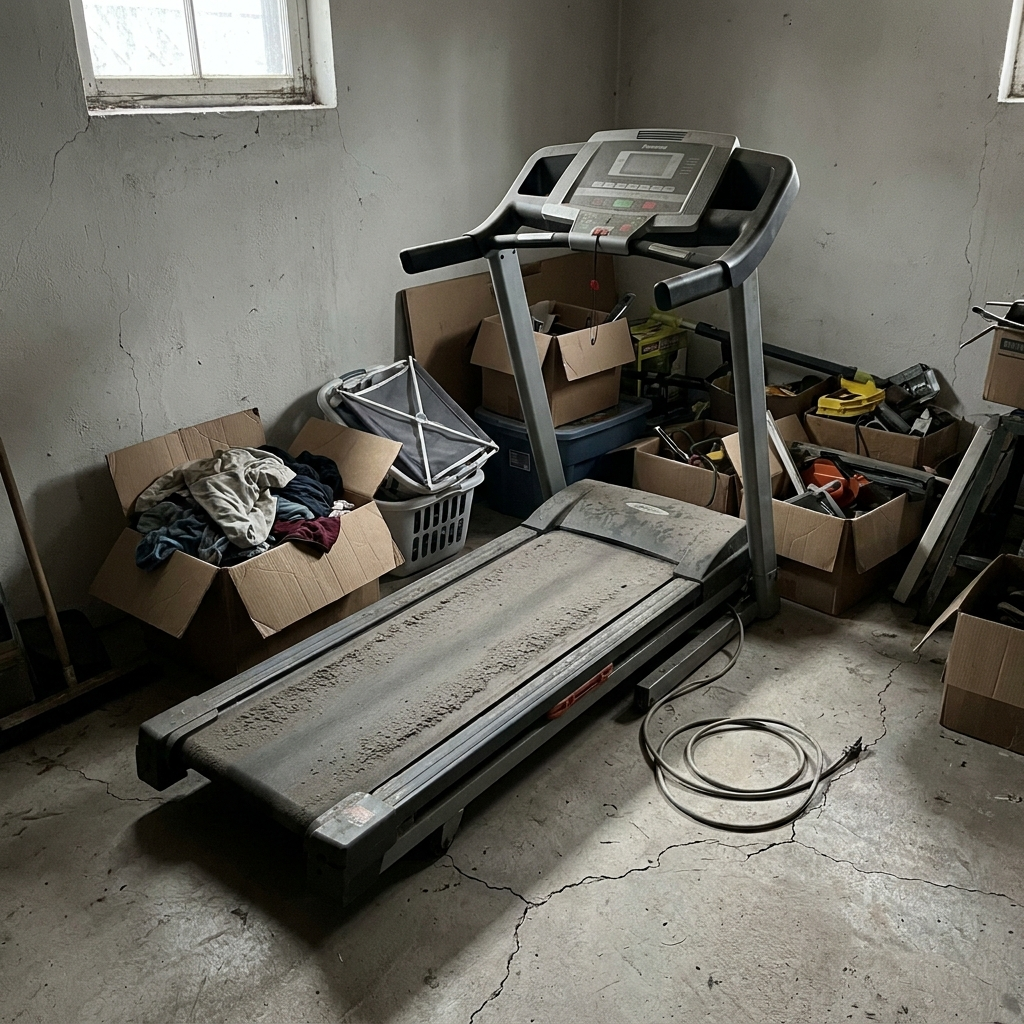
Imagine someone handed you a treadmill.
They said, "Run on this every day. Run long enough, hard enough, consistently enough, and one day you'll finally arrive somewhere God approves of."
So you ran.
You woke up at 5 AM. You sweated. You pushed through the exhaustion. You hated yourself on the days you missed. You promised tomorrow would be different.
But something felt off.
No matter how hard you ran, you never actually got anywhere.
That's because nobody told us the truth:
The treadmill was never plugged into anything.
It wasn't designed to carry us closer to God. It was designed to measure whether we were trying hard enough to deserve Him.
Two different machines.
Two different destinations.
One of them was never going to get us home.
Here's what the treadmill does to a human heart.
Miss one morning, and your brain doesn't log "missed a morning."
It logs "I'm a failure."
Miss three, and the shame kicks in.
And shame doesn't make you run toward God. It makes you hide from Him. That's not weakness. That's how every human nervous system is wired.
So you avoid your Bible for a week.
A week becomes a month.
The guilt piles up. The distance grows. And the system you were using to feel close to God becomes the exact thing pushing you further away.
You try harder. You fail harder. You hide longer.
And the loop tightens.
On top of all of that, you're tired.
Not lazy. Not spiritually weak.
Just genuinely, bone-deep, end-of-the-day, how-is-it-already-bedtime exhausted.
You're running a house. Showing up for a marriage. Answering a seven-year-old's questions about God you don't even know how to answer yourself.
Your body only has so much fuel. Your brain only has so much bandwidth.
And this system the one we've been handed looks at your very real, very human limits and calls them a spiritual defect.
It isn't.
It never was.
So let me say it plain.
You were never supposed to earn the thing you already have.
You were never supposed to prove you're loved.
And you were never supposed to run a race on a machine that wasn't plugged in.
The problem was never you. The problem was the treadmill.
And the moment you step off it everything changes.
Here's what actually fixes it.
It's not more discipline. It's not another plan. It's a completely different engine.
Every habit you've ever had was powered by one of two fuels.
Pressure. Or safety.
We've been running on the wrong one.
Pressure runs hot.
It makes you move fast. It gets you out of bed at 5 AM for a week or two.
And then it runs out.
Every time.
That's not a motivation problem. That's biology.
Your nervous system is literally not designed to run on pressure for years on end. When you try, it burns out. Not because you're weak. Because you're human.
Safety runs differently.
Safety doesn't need a reason to show up.
Safety isn't trying to prove anything.
Safety doesn't flinch when you miss a day, because safety wasn't keeping score in the first place.
Safety is the only fuel a human nervous system can sustain long-term.
And it's the one Performance-Based Christianity never let us touch.
Here's the shift.
The old way: Perform. Then feel close to God.
The new way: You're already close. Let
everything else grow from there.
Read that again. Slowly.
One of those orders your body can sustain forever.
The other one has been quietly killing you.
This isn't a theology debate. It's a nervous system fact.
When your body feels safe, you can breathe. You can return. You can actually want to show up, because you're no longer showing up to be graded.
When you're not auditioning anymore, you start actually being in the room.
Researchers have a term for this.
They call it "felt safety."
And the data is embarrassingly clear about what it does.
When a person's body feels safe in a relationship, any relationship, including her relationship with God , three things happen automatically:
The stress response calms down.
The brain's capacity for connection comes back online.
And hiding stops feeling necessary.
Nothing has to be forced. Nothing has to be willed. The biology just… changes.
There's also fifty years of research on something called "God representation."
It's basically the mental image a person carries of what God is actually like.
And it turns out that image is one of the strongest predictors of whether faith brings peace, or panic.
An image of God as evaluator, keeping score, disappointed, cold , produces shame, avoidance, and burnout.
An image of God as welcomer, warm, unhurried, already glad you're here , produces the opposite.
Same God.
Completely different bodies underneath.
The fix isn't trying to believe harder.
It's changing the image you carry — one small, daily exposure at a time — until your nervous system finally stops bracing.
Here's why this felt so new to me when I found it.
Every other devotional on the shelf is still running the old fuel. They just packaged it prettier.
The "90-day challenge" is pressure with a countdown.
The "Bible-in-a-year" is pressure with a calendar.
Even most "grace-based" devotionals sneak pressure back in the side door.
None of them change the engine.
What I found does.
It stops trying to fix your behavior and starts repairing the thing underneath your behavior — the felt sense of whether you're safe, whether you're loved, whether it's okay to just show up as you are.
Fix that, and the behavior fixes itself.
Not because you tried harder.
Because you finally stopped having to.
Honestly? It's like…
You've been trying to grow a plant by yelling at it.
That's what the old way was.
This is what happens when someone finally turns on the sun.
No more streaks.
No more catch-up.
No more 5 AM proving.
Just safety. Delivered daily. In a form so small your worst day can still complete it.
That's the shift.
And once you feel it work — even once — you can't go back to the other fuel.
You won't want to.
5 Signs You're Still Running on the Old Fuel — And What Changes When You Finally Switch
See how many of these sound familiar. I scored a perfect 5 out of 5 before I figured any of this out.
Sign #1
You feel guilty when you skip.
Not sad. Not disappointed. Guilty.
Like you let someone down. Like you're in trouble. Like you're behind on something.
That's not faith talking. That's pressure talking.
The new way: Missing a day doesn't register as failure. It registers as a missed day. Because nothing's keeping score.
Sign #2
You feel like you have to "catch up."
If you've ever looked at a dated devotional, seen last Tuesday's blank page, and thought "I need to double up to fix this" —
you were running on pressure fuel.
Catching up isn't a spiritual virtue. It's a leftover instinct from a system that treated your relationship with God like a homework assignment.
The new way: There's nothing to catch up on. Today is today.
Sign #3
You compare your "walk" to other women's.
You see her post about her 5 AM quiet time. You hear her small-group testimony. You scroll past her highlighted Bible page.
And something small and hot twists in your chest.
That's not envy. That's the old system telling you there's a ranking — and you're losing.
The new way: There is no ranking. You were never in a competition with her. You were both just told you were.
Sign #4
You dread your quiet time instead of looking forward to it.
Think about that for a second.
You dread spending time with the God who loves you.
That's not because something is wrong with your faith. That's because your nervous system has learned that "quiet time" is where you go to be evaluated.
No human body willingly walks into a performance review every morning.
The new way: When the pressure is gone, showing up feels like exhaling. Not like clocking in.
Sign #5
You feel like a fraud in Christian settings.
Small group. Sunday service. Text chains with your "prayer warrior" friends.
You smile. You nod. You say the right things.
And the whole time, a small voice underneath is whispering: "If they knew how little I actually read my Bible, they'd know I'm faking it."
That voice isn't telling you the truth. That voice is a symptom.
It's what happens when faith is being scored instead of lived. The fraud feeling isn't proof you're fake. It's proof the system has been lying to you about what real looks like.
The new way: You stop feeling like a fraud the moment you stop believing there's a "real Christian" rank you're failing to earn.
If any of those hit —
you're not broken.
You're just still running on the wrong fuel.
And the good news is, once you know what the new fuel is, switching is a lot simpler than anyone led you to believe.
Image description
So What Finally Worked for Me
I'm not going to pretend I invented any of this.
I didn't. I just spent about nine months reading, crying, journaling, talking to a couple of counselors, and trying to piece together what "running on safety instead of pressure" actually looked like in practice.
And somewhere in the middle of all that, I came across a devotional a friend had mailed me.
It's called The Invitation.
I almost didn't open it. Honestly? I had a stack of eight other devotionals I'd already given up on, and I wasn't in a rush to add a ninth.
But this one was different.
The first thing I noticed was what wasn't in it.
No dates. Anywhere. Nothing to fall behind on.
No tombstones.
No streaks. No "Day 47." No catch-up. Just a page. Today.
No 5 AM expectations. Just 3 minutes, whenever you can. On the couch. In the car pickup line. At the kitchen table with a lukewarm coffee.
And the words inside didn't sound like a performance review.
They sounded like someone had finally figured out how to describe the God I'd been reading about my whole life — but had never actually met.
Warm. Unhurried. Already glad I was there.
Not grading me. Not disappointed. Not keeping score.
Just… welcoming.
I want to be honest with you.
I didn't have a lightning-bolt moment the first day. Or the second.
But somewhere around the end of the first week, I noticed something small.
I wasn't dreading picking it up.
For the first time in maybe twenty years — I actually wanted to open the page.
Not because I had to. Not because I was behind. Not because I was trying to prove anything.
Just because it felt… safe.
That's when I understood what had been missing my entire adult Christian life.
I'd been handed a hundred different ways to try harder.
This was the first thing that had ever shown me how to stop trying so hard — and start receiving.

Show Me The Invitation →
If any of what I've written in this article has felt like someone finally describing what's been going on inside you — I want you to know this book exists.
It might be exactly the thing you've been quietly looking for.
Or it might not be for you, and that's okay too.
I'll say this too, I spent more than $600 over the years on devotionals, books, journals, and Bible study subscriptions that all quietly ran on the old fuel.
The Invitation costs less than a single one of them.
And it's the only one that ever actually worked.
But if you've been carrying a closed Bible and a heavy chest for longer than you want to admit —
it's worth a look.

You didn't read this far because you were casually curious.
You read it because something in it felt like you.
It wasn't you. It was never you.
You just have to stop running on the wrong fuel.
Show Me The Invitation →